
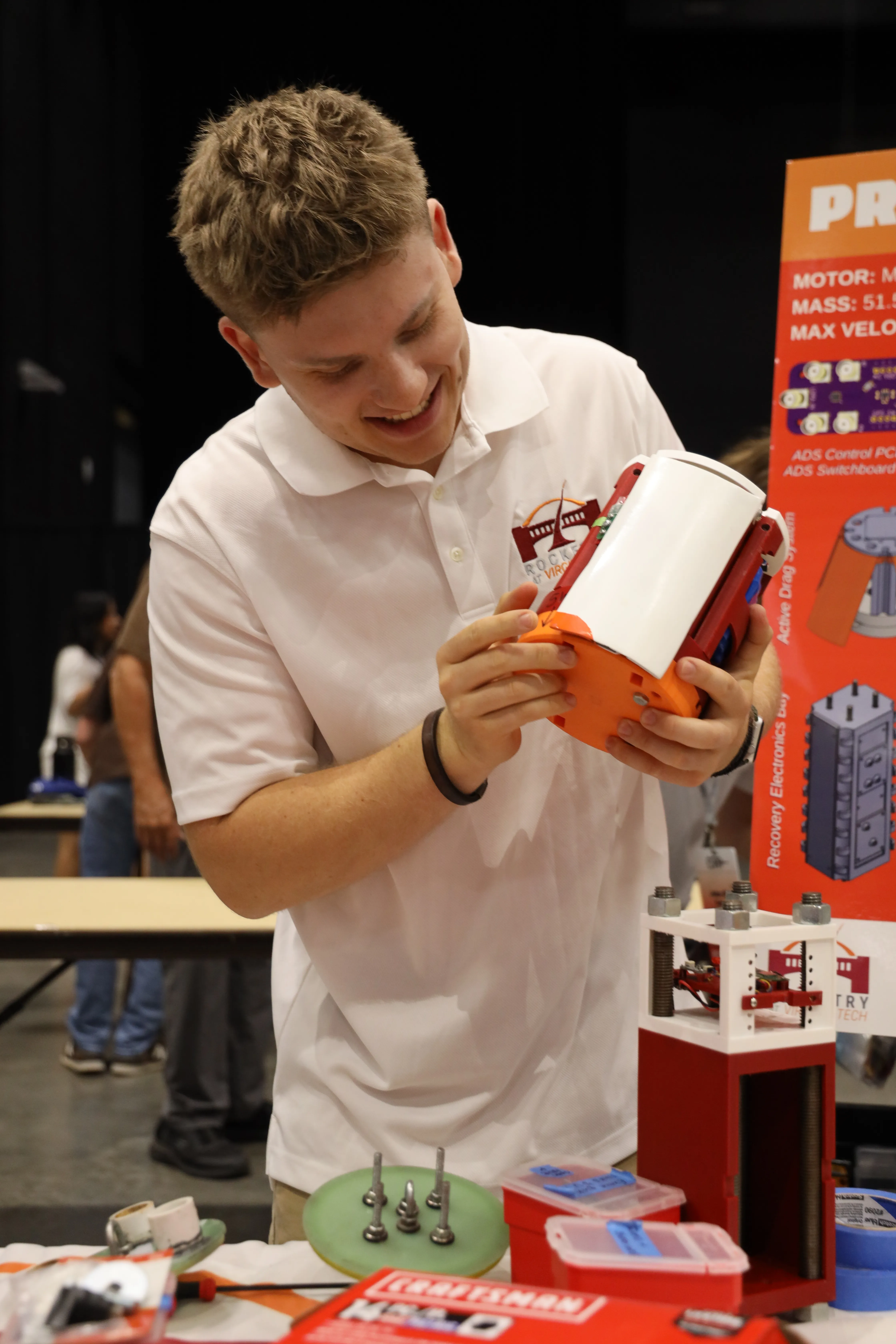
Team Lead: Ethan George
Senior in Mechanical Engineering
This year, Subsystems will be advancing every part of the rocket! By spring, we're aiming to carry each of the subsystem designs into flight-ready prototypes.
The ADS is a dynamic air braking system that helps the rocket more accurately stop at our target apogee of 30,000ft. For this design cycle, Active Drag System is redesigning our air brakes and structurally testing the assembly to withstand the higher G loads of the 30K flight profile, using new CFD data on flap force and placement to hit our target apogee more precisely. In addition to this, our Computational Fluid Dynamics (CFD) sub-set is running a broader aerodynamic study of our rocket to improve stability and drag characterization across the flight envelope.
The Recovery Bay houses all the flight electronics that control the recovery system as well as an external camera. This project also includes the management of the parachutes and black powder charges that need to be tested before each launch. This design cycle, Recovery is redesigning our deployment system to support the jump from a 10K- to a 30K-foot apogee, with more robust ejection and testing along the way.
The Payload structure houses the electronics of the payload project and needs to be designed to fit a specific form factor and weight. This project’s goal this year is to redesign the structure to accommodate the new payload electronics project.
Ground Station is a newer project to subsystems, which will be undergoing a mechanical redesign alongside Avionics to keep our telemetry solid on launch day.
With the implementation of a design year, this year will be spent designing and 3D prototyping these crucial subsystems. The spring semester and following academic year will then be focused on manufacturing the subsystems, ground and flight testing, and performing necessary validations & improvements.
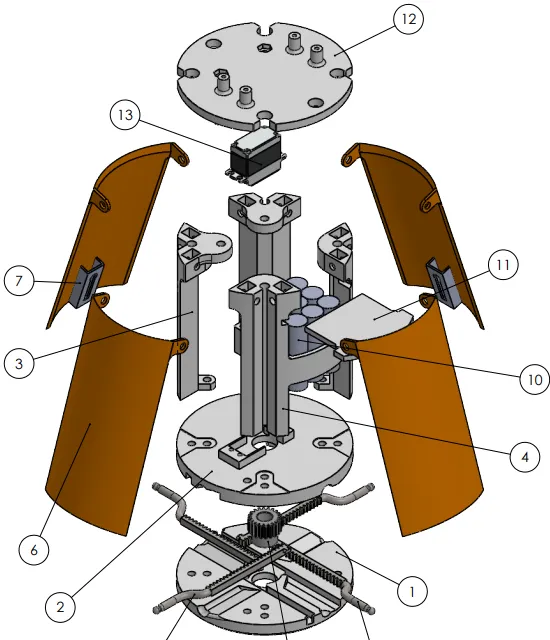
ADS Exploded CAD Assembly
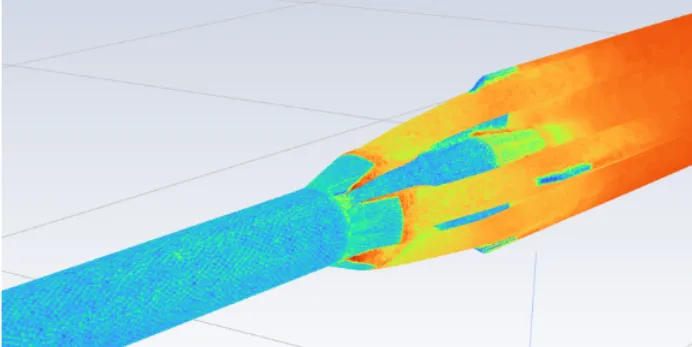
CFD Model of ADS Flaps
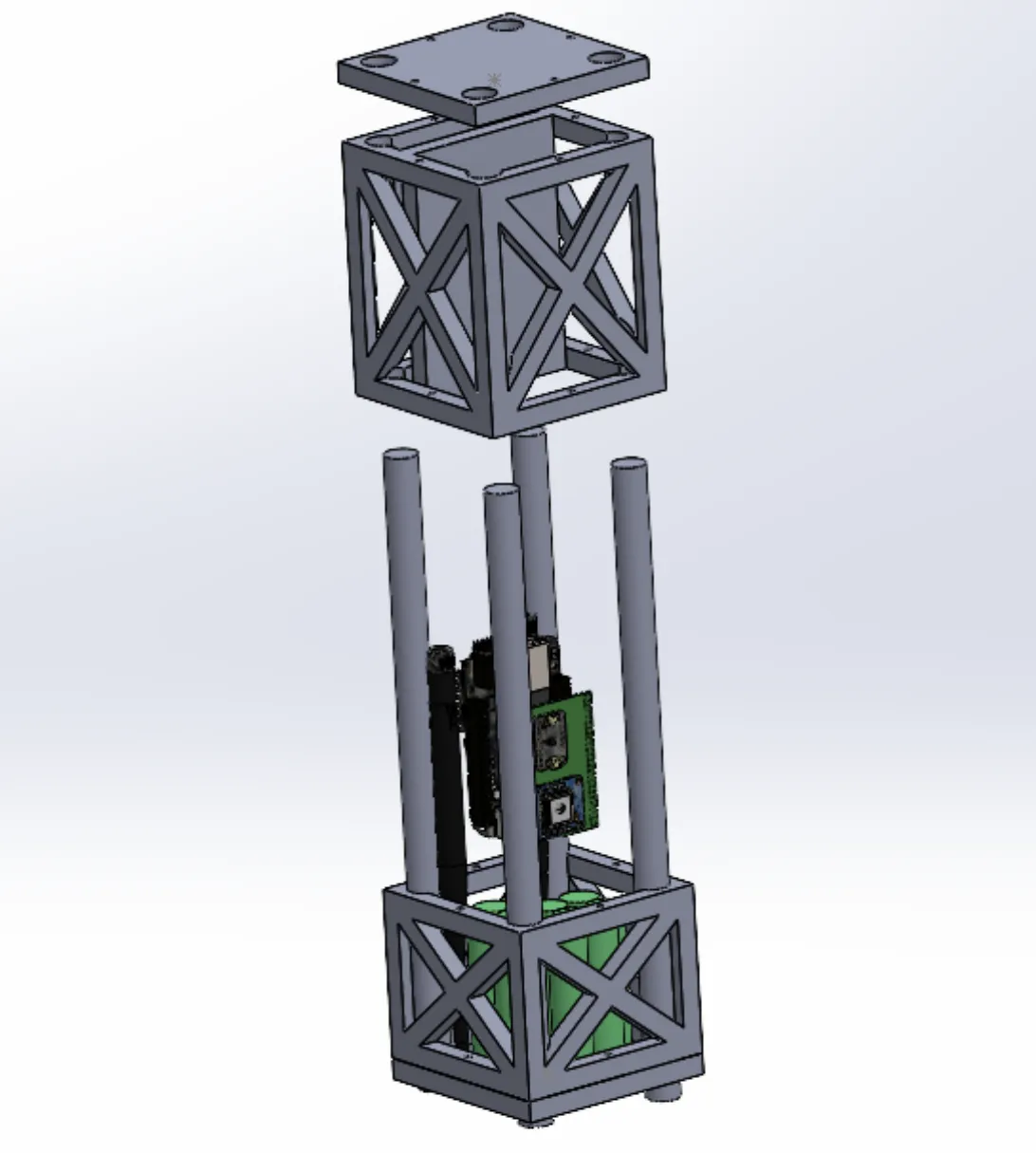
2023-2024 Payload CAD Design